
Life Abroad: The challenges of taking the plunge
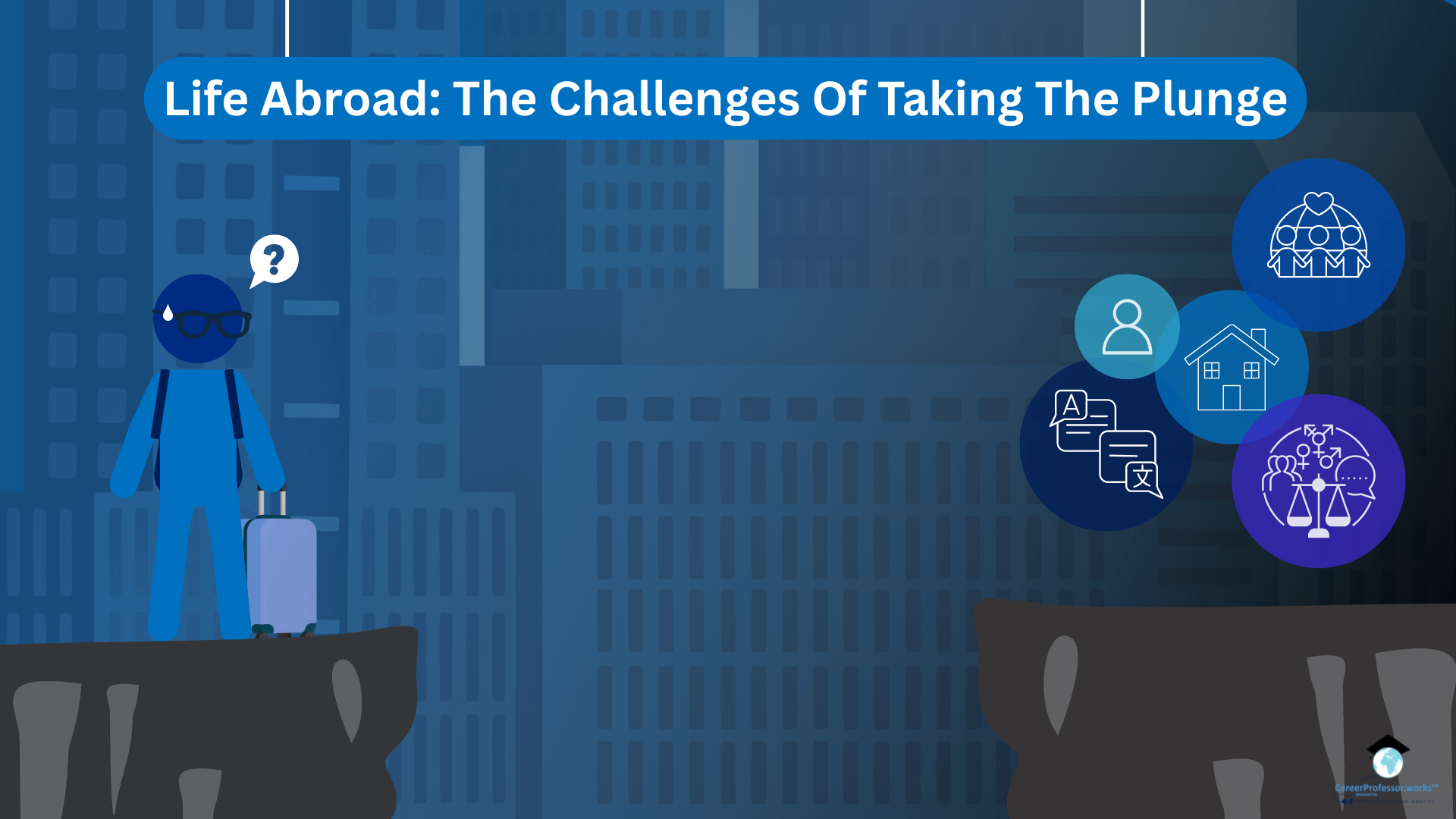
© CareerProfessor.works. All Rights Reserved.
In our previous blog, we talked about why people move abroad and in what ways it transforms you. This time, we’re looking at the part that usually gets left out of the story. Because moving abroad is not always romantic. Sometimes, it’s just hard.
This is the part where expectations collide with reality. Where the dream version of your life doesn’t quite match the everyday experience. And all of a sudden, you realize the biggest challenge isn’t paperwork or logistics, but learning how to navigate change without losing yourself in the process. Let’s walk through some of the most common challenges people face when moving abroad and how to deal with them.
The challenges nobody warns you about
Culture shock isn't a phase, but a process
Culture shock is not just about missing home food or noticing cultural differences. It's the accumulation of small moments where things don't work the way you're used to, causing stress that builds up over time. It starts with the "honeymoon phase", when everything feels magical. But then reality catches up. Suddenly, you're in a supermarket, almost in tears, because you can't find anything familiar. Your brain is working overtime to decode a completely new cultural operating system, and even simple tasks, such as ordering coffee or grocery shopping, suddenly feel impossibly complex.
1) Language barriers
Language barriers are the number one factor in culture shock worldwide. You might be funny, articulate, and insightful in your native language, but here you're reduced to simple phrases and awkward smiles. That disconnect between who you are and who you can show yourself to be can be profoundly exhausting.
Psychological and emotional challenges - the invisible weight
Unfortunately, this disconnect reaches even deeper, shaking the foundation of who you think you are. Moving abroad brings complex psychological challenges that determine whether you'll thrive or merely survive.
1) Loss of identity
When social roles, career status, or support systems change overnight, something fundamental shifts. The confident person you were back home suddenly feels uncertain. The version of you that existed in your home country doesn't fully "work" anymore, yet a new one hasn't formed to take its place. You're suspended in an in-between state, when you feel like pieces of yourself are missing.
2) Expectation versus reality
These feelings intensify when reality doesn't match what you imagined. Maybe you thought you'd immediately find community, or feel at home faster. The gap between expectation and experience creates disappointment that's hard to shake. You begin questioning the decision, wondering if the sacrifice was worth it.
3) Racism or discrimination
For many, this struggle becomes more complicated when facing prejudice based on background, accent, or appearance. Whether it's microaggressions or feeling unwelcome in certain spaces, it fundamentally shakes your sense of safety and self-worth in ways that compound every other challenge.
4) Lack of support and community
And perhaps most painfully, you're navigating all this without your support network. Your best friends are eight time zones away. Building a network in a new country can be difficult. Even when you do find support, it often feels inadequate compared to the deep, established connections you had back home with people who understood you without explanation.
How to handle it
The good news? While these challenges are real and intense, they're not impossible to overcome. What separates those who thrive abroad from those who struggle isn't luck or natural resilience (although that would be helpful) - it's having strategies and the willingness to use them. Here's what actually works.
1) Start learning the language before you arrive and keep going after
Basic phrases give you small victories. Try your best to commit to consistent practice after arrival. Even a few words will open many doors to conversations, friendships, and small everyday wins. Keep showing up, make mistakes proudly, and let your progress be your motivation.
2) Build your support system intentionally
Waiting for the network to appear by itself will leave you isolated for months. Actively seek out expatriate communities, professional networks, hobby clubs, or sports teams. Anything that puts you in regular contact with the same people. Willingness, openness and consistency will create connections.
3) Create structure when everything feels chaotic
Small, consistent rituals give your brain stability. A morning coffee routine. A weekend walk. Cooking one familiar meal weekly. These anchors signal that not everything around is threatening.
4) Reframe expectation mismatches as information, not failure
When reality doesn't match expectations, treat it as valuable data. Write down what surprised you, what disappointed you, and what unexpectedly delighted you. This will help you to understand the environment faster and adapt your expectations, without clinging to fantasies.
5) Document small wins
Culture shock can make you forget progress. Keep a simple record of moments when things clicked - navigating transport successfully, someone laughing at your joke, helping a lost tourist. You will notice how far you've come!
6) Practice "micro-integration" daily
Each day, do one tiny thing connecting you to your new environment. A brief conversation with a shopkeeper. Trying local food. Reading a local news article. These micro-moments accumulate, gradually making the foreign feel familiar.
7) Allow yourself to grieve
Moving abroad involves a genuine loss of proximity to loved ones, of cultural fluency, of the life you built. Acknowledging this doesn't mean you made a mistake. Give yourself permission to feel homesick while building what will be. Both can co-exist simultaneously.
The journey is worth it
The journey from outsider to finding your place isn't linear. There will be days when you're thriving and days when you want to book a flight home. But with some minor actions, self-compassion, and patience, the balance will shift. The foreign will be familiar. The awkwardness will be comfortable. And one day, you realize you're not just surviving abroad, but you're genuinely living there.
Blog post written by Sofiya Yuchko for Expertise in Labour Mobility
Image by Jizelle Ys for CareerProfessor.works
© CareerProfessor.works. All Rights Reserved.